At Housing 2026, we asked delegates one question: “If you could fix one thing about your heat network tomorrow, what would it be?” The options were: The results were telling. The two most popular responses were “be better prepared for regulation” and “improve reliability and stop complaints”. While the last major survey showed that heat network consumers reported higher levels of satisfaction with their heating and hot water system (74%) than those not on a heat networks (67%), there are challenges with some heat networks as defined below.
Throughout the conference, one message came through loud and clear: many social landlords, councils, developers, and other heat network owners and operators know regulation is coming, but they’re unsure where to start. At the same time, they face the day-to-day challenge of maintaining reliable service and responding to resident complaints related to heat networks which have exceeded their planned lifespan or which were designed, built and maintained without adhering to the heat network Code of Practice (CP1). 
- Be better prepared for new regulation
- Decarbonise your heat source
- Reduce heat losses
- Improve reliability and stop complaints

The good news? These priorities are more closely linked than many people realise. Better Regulation Readiness Starts with Better Networks.
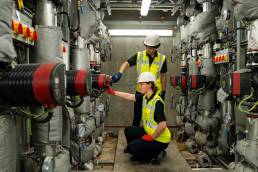
Preparing for heat network regulation isn’t just about paperwork and compliance. At its heart, regulation is designed to ensure residents receive reliable, efficient heating and hot water services. By meeting higher technical, operational and consumer protection standards, heat network operators naturally improve the quality of service they deliver. In other words, taking steps towards compliance today can also help reduce complaints and improve customer satisfaction tomorrow.Not sure where to start? Start with a portfolio review.
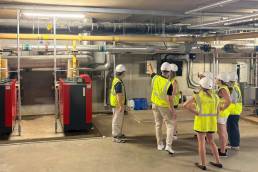
One of the most common conversations we had at Housing 2026 was with organisations feeling overwhelmed by the scale of upcoming regulatory change. In many instances social landlords are not technical experts when it comes to heat networks, but operating in a regulated sector they understand the reason for compliance. Regulation can feel intimidating. Change always does, but our advice is: don’t try to do everything at once. We typically start with a portfolio review, then move into optimisation studies to identify opportunities for improvement. From there, we look at how those findings can be applied across similar sites through applicability studies, before progressing to capital works to deliver the improvements. There’s government funding available to support both the studies and the delivery phase. A FairHeat Portfolio Review provides a practical starting point. We assess your sites and provide a clear Red, Amber, Green (RAG) rating helping you understand:- Which networks are most exposed to regulatory risk
- Which sites should be prioritised for investment
- Where the biggest opportunities for improvement exist
- Which quick wins can be delivered immediately

Identifying Low-Cost Improvements Through Optimisation Studies
Many organisations assume preparing for regulation requires major capital investment. In reality, some of the most effective improvements begin with understanding how a network is operating today. Our Optimisation Studies help social landlords identify opportunities to improve system performance, reduce energy consumption, improve resident comfort, reduce operating costs and enhance reliability. Often, there are straightforward operational changes that can deliver meaningful benefits before larger investment programmes are required.Funding Support Through the Heat Network Efficiency Scheme
For social landlords looking to move beyond quick wins, funding support may also be available. The Heat Network Efficiency Scheme (HNES) has helped many heat network owners investigate opportunities for improvement and implement measures that enhance performance and efficiency.Real Examples of Heat Networks Improving Performance
Real-world examples show the scale of improvement that is possible when underperforming heat networks are optimised. At Richmond Park in Sheffield, FairHeat worked with Great Places Housing Group to improve heat networks serving 299 homes, delivering a 40% reduction in heat loss and a 23% reduction in energy consumption, alongside improved reliability, safety and resident control. At Glyn Street in London, a major retrofit of a heat network serving 69 dwellings achieved a 72% reduction in heat losses, a 45% reduction in gas consumption, an 85% reduction in pump electricity use, and reduced corridor temperatures from as high as 38-40°C to around 22°C, significantly improving resident comfort while cutting energy waste and carbon emissions