Client Type:Housing Association
Services:Site AuditOptimisation Study
Would you like to discuss our solutions for your project?

Innovative Approach to Optimisation

Significant Energy Savings and Decarbonisation

Financial Viability and Funding Success
"At One Manchester, delivering the best possible service to our customers is one of our top priorities. FairHeat has been instrumental in helping us investigate and address issues within our heat network portfolio, ensuring our systems operate as efficiently as possible. The recommendations provided in their detailed reports have delivered excellent results, including significant energy savings and decarbonisation.” “We are proud to have partnered with FairHeat and look forward to continuing this relationship. Working with Andrew Reynolds and the Optimisation team at FairHeat has been a great experience, their expert knowledge and ability to explain everything in detail has been invaluable. Beyond their technical expertise, the team’s friendly and helpful approach has made our collaboration a pleasure. Their impressive work has led us to commission further studies following the success at Erneley Close, with two more projects scheduled in the coming months. Additionally, as a Government Heat Network Training Provider, FairHeat has delivered grant-funded training to our engineers, equipping them with valuable skills to enhance the operation, performance and efficiency of our networks. The training was well-received, with our engineers providing positive feedback on the experience.” “We would highly recommend FairHeat to others—they are amazing to work with.”
Naomi Walton
Heat Network & Utility Co-Ordinator (Assets & Energy), One Manchester
Background
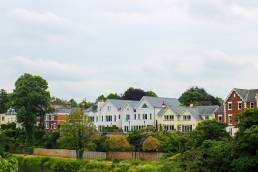
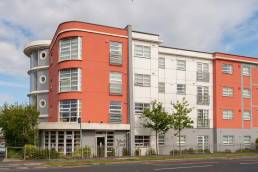
The project, located in an economically challenged area of South East Manchester, focused on a social housing development comprising two blocks with a total of 32 maisonettes constructed in the 1960s. Post-2015, the buildings underwent a significant retrofit to meet Passivhaus standards, involving refurbishment that temporarily relocated residents. This standard emphasised a highly insulated and efficient building fabric for minimal energy use in heating and cooling. The retrofit included replacing individual gas boilers with communal gas boilers and Heat Interface Units (HIUs). Due to spatial constraints, the plant room was unconventionally placed on the top floor of each building.
The client, One Manchester, is a housing association that owns and manages over 12,000 homes in central, south and east Manchester. New to working with FairHeat, the client approached us following previous engagements with another consultancy. Despite having commissioned the previous consultancy on three optimisation studies, they encountered difficulties securing capital works funding due to the absence of concrete, costed work packages in the reports provided.

Challenge
FairHeat was commissioned by One Manchester to conduct an optimisation study aimed at addressing significant challenges within the development.
From the onset, FairHeat identified several critical issues that were impacting the efficiency and functionality of the heating system. Among these were:
- A poorly designed keep-warm valve, which resulted in all Heat Interface Units (HIUs) significantly bypassing during standby operation — a state that accounts for approximately 85% of the year.
- The network was plagued by multiple other bypasses that contributed to excessive network temperatures, reaching up to 80 °C. A base of riser bypass valve was particularly problematic, diverting a significant portion of the flow from other areas of the network, leading to regular supply complaints.
- The thermal store was also found to be suboptimal, with poor arrangements for charging and discharging, thereby reducing its effectiveness and acting more as a low loss header, which increased return temperatures back to the boilers.
- The plant room exhibited several common issues, such as non-functional heat meters, the use of twin-head pumps without strainers, poorly configured dosing pot arrangements, and various equipment in hand, further compounding the distribution system's inefficiencies.
Residents had voiced multiple complaints regarding the heating system, highlighting issues such as inconsistent hot water supply, certain areas of the buildings not receiving hot water at all, and instances of overheating despite the heating being turned off.
These challenges necessitated a comprehensive approach to overhaul and optimise the heating system, ensuring it meets the residents’ needs while potentially qualifying for HNES funding to support the improvements.

FairHeat Solution
To address the identified challenges, FairHeat’s specialist Optimisation team developed a comprehensive solution tailored to enhance the efficiency and reliability of the heat network. This multi-faceted approach aims to leverage the exceptional characteristics of the building’s fabric, aligning with its Passivhaus design, to introduce significant improvements.
The team targets the strategy by lowering the flow temperatures within the heating network. The development’s building fabric, which adheres to Passivhaus standards of high insulation and energy efficiency, will make it possible to immediately implement this change. This adjustment will be critical for reducing energy consumption and enhancing the overall system efficiency.
Recognising the limitations of the existing Heat Interface Units (HIUs), FairHeat proposed the replacement of the current HIU models with more advanced and efficient units. This step is aimed at addressing the issues related to inconsistent hot water supply and the unintended bypassing during standby operations.
Furthermore, FairHeat recommended the installation of Air Source Heat Pumps (ASHPs). Given the development’s Passivhaus-certified building fabric, which is optimised for low energy consumption, the transition to ASHPs presented a perfect match. This move not only promises to lower the temperatures of the network, making the system more efficient and sustainable, but also positions the development to primarily utilise ASHPs in place of the traditional gas boilers.
These strategic interventions by FairHeat’s Optimisation team are designed to solve the immediate complaints and inefficiencies while ensuring the long-term sustainability and comfort for the client and residents.
Results
The client is currently actioning several of the in-house recommendations from the first work package aimed to stabilise the site, with the potential to submit a bid in a later HNES round of funding.
The modelled outcomes of FairHeat’s interventions are particularly impressive, promising substantial energy and cost savings, this includes:
- Electricity Consumption: The adoption of variable speed pumps, as opposed to fixed speed ones, is projected to cut pump electricity consumption by up to 50%. This significant reduction underscores the importance of adopting more efficient technologies that align with the system's operational needs.
- Financial Payback: The most extensive work package designed by FairHeat is expected to achieve payback within 8 years. This rapid return on investment highlights the financial viability of the proposed solutions, making a compelling case for their implementation.
- Carbon Consumption: A remarkable reduction in carbon consumption is forecasted, with a 49% decrease in Work Package 2 and an impressive 95% decrease in Work Package 3. These reductions illustrate the potential of FairHeat's solutions to significantly lower the carbon footprint of the heating system, aligning with the UK’s broader net zero carbon goals.
These results indicate not only the technical feasibility of the proposed solutions but also their economic viability, offering One Manchester a roadmap for similar heat network projects to optimise efficiency and performance.
FairHeat’s solution to lower flow temperatures by leveraging the exceptional building fabric and the strategic replacement of HIU models with more efficient units, alongside the installation of Air Source Heat Pumps (ASHPs), represents an innovative approach. This not only addressed the immediate challenges of the heat network but also aligned with the Passivhaus principles of energy efficiency, showcasing a forward-thinking strategy that maximises the unique characteristics of the building.
The projected outcomes, including up to a 50% reduction in pump electricity consumption, and substantial reductions in carbon consumption (49% in Work Package 2 and 95% in Work Package 3), highlight the case study’s strong impact. These results underline the potential of targeted optimisation studies and infrastructure improvements to significantly reduce energy use and carbon footprint in residential developments.
The ability to secure funding for the project and the forecasted payback within 8 years for the most extensive work package demonstrate the financial viability of FairHeat’s solutions. Moreover, the successful submission of the optimisation study and the strategic advice provided to the client to secure further Capital Works funding through the next round of HNES emphasize FairHeat’s role in not only devising technical solutions but also facilitating the financial realisation of such projects.