Less overheating,
more resident comfort.

85% lower
heat losses.

Existing network reused,
no full replacement.
At Elk View and Tulloch Court, Great Places faced a challenge familiar to many housing providers: buildings designed to support comfortable, independent living were overheating due to inefficient equipment and avoidable energy waste. FairHeat was brought in to rethink the system from first principles.
The result was a practical, carefully engineered retrofit that improved resident comfort, cut heat losses dramatically and created a more efficient, future-ready network across both schemes. By working with FairHeat, Great Places continued to put residents first by helping to provide comfortable, efficient places to call home.
Background
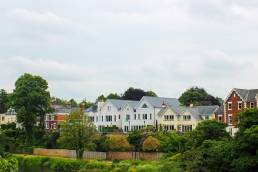
The project covered two near-identical 2010 extra care residential developments in Blackpool:
- Elk View, a 48-dwelling scheme
- Tulloch Court, a 46-dwelling scheme
Both buildings were originally served by four-pipe heating and hot water networks, with space heating provided by gas-fired boilers and domestic hot water generated by centralised gas-fired calorifiers. Although this type of system was common when the developments were built, it had become increasingly inefficient over time, particularly given the long pipe runs and high communal heat losses across both sites. As a rule of thumb, longer lengths of pipework create higher unwanted heat losses into corridors.
Challenge
Both sites were facing issues that affected the heating system and residents’ comfort. Heat was being wasted through uncontrollable communal underfloor heating systems, the heating and hot water systems had not been installed or commissioned properly, and the original four-pipe network had long pipe runs that lost heat along the way. This meant too much unwanted heat was moving around the buildings, making some flats and communal areas uncomfortably warm.
At the same time, the system was expensive to run. Oversized pumps were using more energy than needed, working harder than necessary to move water around the system. Great Places needed a solution that would improve comfort, reduce waste and make better use of the infrastructure already in place.
FairHeat Solution
FairHeat designed a retrofit that solved the main causes of the problem.
The biggest change was converting the existing system into a two-pipe, low-temperature hot water network and removing the old domestic hot water distribution network that formed part of the previous four-pipe system. By using the oversized space heating pipework, FairHeat reduced unwanted heat losses throughout the building and made the system simpler to run.
As part of the design process, FairHeat verified that there was enough capacity in the existing space heating pipework to support the move to a two-pipe setup. This meant Great Places could avoid the cost and disruption of installing a completely new network.
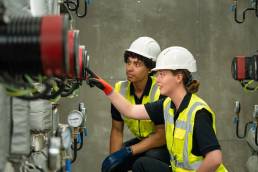
FairHeat also installed heat interface units, also known as HIUs, in every flat so hot water could be produced instantly when residents needed it. This reduced the risk of harmful bacteria in the hot water system and removed the need to keep hot water circulating constantly around the building.
Thicker insulation helped cut heat losses, thermal storage improved how efficiently heat was generated, and better in-home controls gave residents more control over their comfort. Together, these changes made the system safer, more efficient and easier for residents to use.

Result
The impact of the project was immediate and measurable. The temperature of water entering individual flats through the underfloor heating was reduced by 30%. This significantly lowered the risk of overheating in dwellings and communal areas, while also reducing the potential for long-term damage to the flooring itself.
At Elk View, total network heat losses fell from 478 W per flat to 74 W per flat. This represents an 85% reduction in heat lost from the system.
FairHeat helped turn two challenging heat networks into assets that are cheaper to run, easier to control and better suited to supporting older residents. By reducing overheating, improving controllability and cutting wasted energy, the project delivered a better day-to-day living environment while also improving overall system performance and lowering long-term operational risk.