Client Type:Housing Association

Services:Retrofit
Would you like to discuss our solutions for your project?

Improved System Reliability

Increased Efficiency

Enhanced Water Quality & System Control
“We have been able to significantly turn around our customers experience of their district heat network. The financial funding that we received from DESNZ enabled us to address the underlying causes of recurring leaks. We were able to retrofit new risers and lateral expansion loops in all blocks as well as install new high performing HIUs in our rented units. We will be investing further in Windmill Park this year, by extending the HIU replacement programme to all our leasehold units. Pre-commissioning the performance monitoring devices fitted to HIUs will help reduce installation time making the entire process quicker and more convenient.”
Jennifer Mclean
Major Works Project Manager, Notting Hill Genesis.
Background
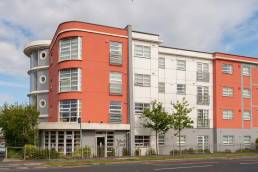
In London stands Windmill Park, a Notting Hill Genesis (NHG) development comprising 212 dwellings across 10 blocks. The development faced significant challenges that undermined its potential due to persistent pipework failures, joint leaks, and inadequate Heat Interface Unit (HIU) operation. Oversized pipework and subpar insulation translated into high heat losses, leading to dissatisfactory resident experiences. Recognising the need for transformation, NHG sought assistance from FairHeat, initiating strategic interventions that would rejuvenate its heat network.

Challenge
Windmill Park faced a recurring problem of supply unreliability, which was a result of frequent pipework failures and joint leaks. These were inherently caused by thermal expansion of plastic pipework that had no expansion provision – a key initial design failure. The outages created by the plastic pipework joint failure, created downtime for repairs, which allowed all riser, laterals and terminal run pipework to cool and contract. The continual and routine contracting and expanding as a result of failure and reinstatement, weakened pipework throughout the development and increased the likelihood of leaks. In addition, failed riser and lateral pipework was replaced with thin wall carbon steel pipework which pin-holed over time as further leaks introduced excessive amounts of oxygen into the system.
To accompany the above, all observed HIUs across the development were in very poor condition and bypassing approximately 500 – 700 l/hr continuously. The bypass flow rate had become so bad that the network pumps were operating at maximum and boiler temperatures were set to 80°C in order to provide the network with adequate heat supply. However, at the time of FairHeat’s engagement, maintenance callouts were excessive and uncontrollable. The HIUs were irreparable, and the elevated temperatures and pressures were further exacerbating the stress put on the plastic pipework. The pipework’s life expectancy was significantly reduced at these operating conditions.

FairHeat Solution
Optimisation Study and HNES Demonstrator
NHG took a proactive approach to address these challenges by partnering with FairHeat and tapping into the Heat Network Efficiency Scheme (HNES) Demonstrator funding. FairHeat, a leading authority in heat network optimisation, conducted a comprehensive options appraisal. This options appraisal consisted of several ways to remediate the expansion and water quality related issues on the plastic pipework, whilst ascertaining the most feasible efficiency improvement measures to enable reduction in bypass flow rate and network heat losses. This assessment paved the way for a holistic solution encompassing several vital aspects of the heat network.
Capital Works
FairHeat’s proposed a multi-faceted approach, including:
- High Efficiency HIUs: Retrofitting non-leasehold HIUs with high-performance models to enhance overall efficiency.
- Risers Retrofit: Retrofitting risers within residential blocks tackled the pervasive pipework issues by removing corroded metal pipework and leaking plastic pipework.
- Expansion Loops: Installation of these within corridors, reducing pressure on pipework joints triggered by thermal expansion.
- Plant Room Control Strategy: Introducing a carefully devised plant room control strategy, reducing gas consumption and introducing measures to enhance water quality.
Following the awarding of HNES funding, emergency works were required whilst the design and implementation works were being undertaken. A leak on underground pipework meant that emergency survey and temporary repair measures were carried out. It was identified that the same plastic pipework installed in the buildings had been installed underground, against manufacturer’s installation guidance. Lack of isolation provision between these sections of pipework and the energy centre meant any pipework failure would require a full system shut down to resolve.
Furthermore, a second iteration of HIU retrofit were made possible on the leasehold properties.
Following the completion of the first round of HNES funded works, a subsequent HNES application was submitted with the following scope:
- High Efficiency HIUs: Retrofitting leasehold HIUs with high-performance models to enhance overall efficiency.
- Underground pipework replacement: Installation of isolation provision outside each residential block and installing new steel pipework of reduced size and higher insulation spec to further improve heat losses.
Results
Notably, the heat network at Windmill Park has enjoyed no leak generated supply interruptions since March 2022, marking a substantial step up in supply reliability. This significant improvement has been a catalyst for a substantial decrease in maintenance callouts and resident complaints, creating a more harmonious living environment.
From a technical aspect, the adoption of high-efficiency HIUs, optimised pipe sizing, upgraded insulation, and the application of a plant room control strategy have collectively led to a reduction in heat losses across the development. These enhancements not only saved operational costs but also contributed to elevated resident comfort.
The plant room itself underwent an efficiency revolution. The network flow rate was reduced by over 100-fold. Now, a single boiler and pump manage the heat distribution to the network with a 95% reduction in pump energy consumption. The orchestration of pumps and boilers based on variable demand ensures an energy-efficient operation and avoids excessive operation when demand is low.
Water quality has also improved significantly over the project. The complete removal of leaks across the system has facilitated control over the water chemistry and retrofitted online monitoring equipment, alongside remote BMS access, enables the NHG’s maintenance contractor to be notified of any sudden changes in system conditions.
The achievements and outcome of the Windmill Park project have been recognised by industry at both the H&V News and HVR Awards.

Since the intervention in March 2022, the heat network has had no leak-related supply interruptions, drastically reducing maintenance callouts and resident complaints.
The project resulted in a 95% reduction in pump energy consumption and reduced gas usage, thanks to the retrofitting of high-efficiency Heat Interface Units (HIUs), improved pipework insulation, and an optimised plant room control strategy.
The introduction of remote monitoring and improved water chemistry management has ensured better system stability, allowing NHG’s maintenance teams to manage the system more proactively and prevent future issues.